
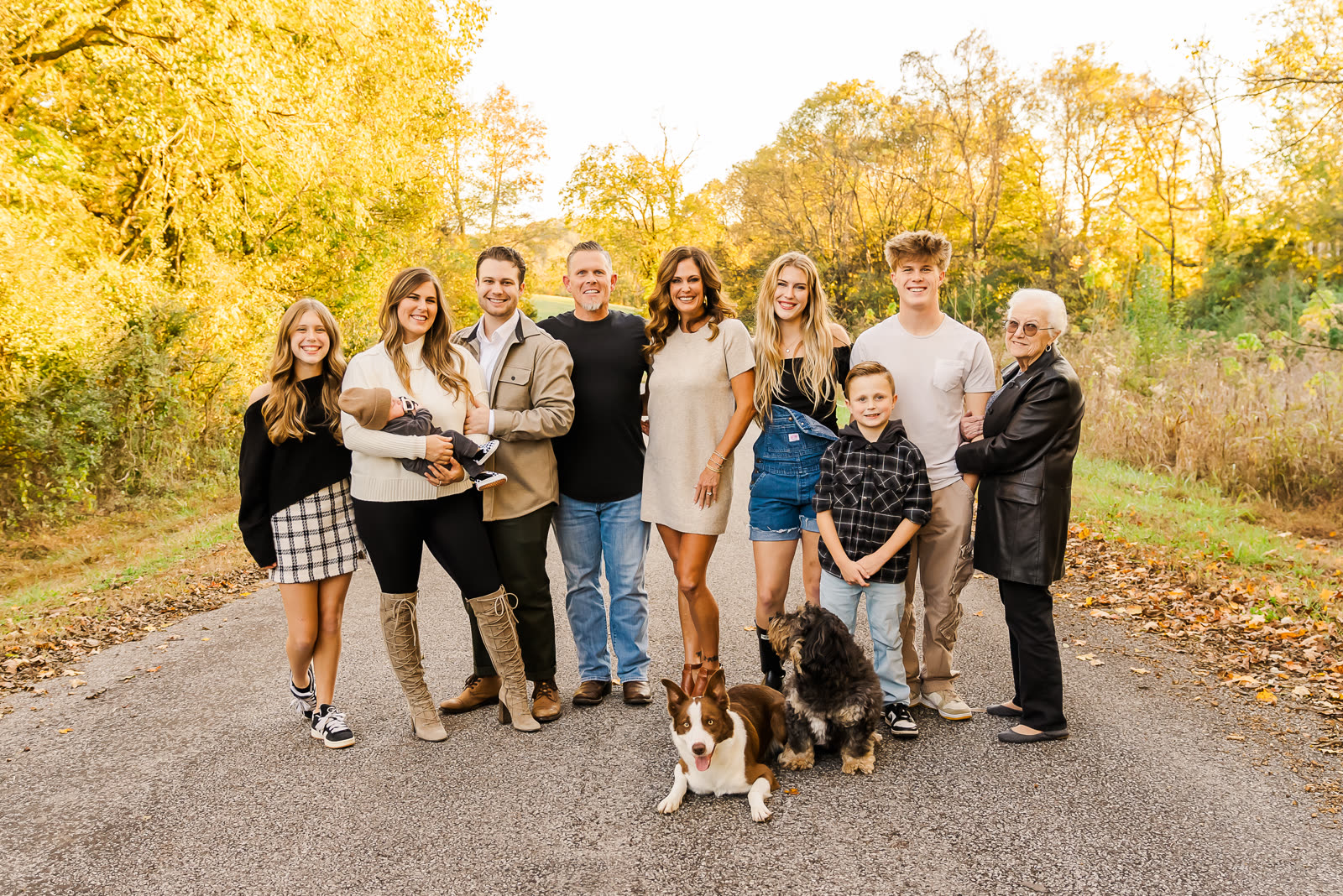
Say your family session is Saturday. It is Tuesday night, the kids are asleep, and there is a pile of clothes on the bed and no plan. Every outfit looks fine on its own and wrong next to the others. You are about to text the group “just wear fall colors” and hope.
There is a faster way. Twenty minutes, three decisions, everyone dressed. That is what this post is: the system we would hand you across a table, including the parts most guides skip (babies, plus-size fit, what the photographer actually wishes you knew).
The Real Problem Is Not the Clothes
Nobody searches what to wear for family photos because they own nothing nice. The problem is coordination. Five people, five closets, one frame. Pick the outfits one at a time and you get five good outfits that fight each other.
The fix is to stop choosing outfits and start choosing a palette. Once the palette exists, every choice gets easy, because the question changes from “does this look good” to “is this one of our three colors.” A six-year-old can answer that. So can a grandfather who hates having his picture taken.
Step One: Pick Three Colors (Five Minutes)
Open the closet of whoever has the most clothes and find one solid piece you love. That is your first color. Now pick two more that sit next to it comfortably: one neutral, and one that is darker or softer than the first.
Combinations that work outside in the fall, year after year: cream, rust and denim. Olive, camel and black. Mustard, charcoal and oatmeal. Dusty blue, cream and tan. One accent color, two quiet colors is the whole rule.
Do not build it from what is on sale this month; trend colors date a photo fast. The neutrals, denim, black and cream on the family at the top of this post will look right in twenty years, which is the point of the picture.
Step Two: Build the Anchor Outfit (Usually Mom, Five Minutes)
Every family photo has one outfit the rest are built around. Usually it is mom’s. Mom is typically the one who cares most, has the most options, and will be the hardest to make happy after the fact. Dress her first, in the outfit she feels best in, and dress everyone else to support it.
Say the anchor is a long rust dress. Dad goes in a cream henley or a chambray shirt with dark jeans, not rust. The kids pick up the cream and the denim, and maybe one wears a rust cardigan to echo mom without copying her. Grandparents get the neutrals.
Two people in the same color next to each other is fine. Everyone in the same color is a uniform.
Step Three: Dress Everyone Else Around It (Ten Minutes)
Now go person by person, fastest first. Each outfit only has to answer two questions: is it in the palette, and does it have texture.
Texture is what makes a group of solid colors look rich instead of flat. A cable-knit sweater, a corduroy jacket, a linen shirt, suede boots, a waffle-knit henley. Texture reads on camera as depth. Patterns read as noise. If you want one pattern in the group, make it big and soft (a wide plaid flannel, a loose floral on one person) and keep everyone else solid.
Why Tiny Stripes, Logos, Neon and White Tees Fail on Camera
Some of this you would never guess until you see the finished file.
Thin stripes and small checks can produce a shimmer on a camera sensor called moiré. It looks like the shirt is vibrating, and it is hard to fix well in editing. Thick stripes are fine. Pinstripes and fine gingham are not.
Logos and graphics pull the eye straight to the chest and date the photo to a specific year. If it has words on it, change it.
Neon and very saturated colors (hot pink, lime, bright orange) throw a color cast onto the skin of whoever stands nearby, and now a child looks faintly green. Softer versions of the same colors (rust instead of orange, blush instead of hot pink) do not do this.
The all-white-shirts-and-khakis look has two problems. White blows out in bright light, so the shirts turn into flat white shapes. And white shows every wrinkle, sweat mark and grass stain, which with children is a matter of when, not if. Cream, oatmeal and ivory give you the same lightness with none of the drama.
Fall Sessions Outside Mean Layers
If your session is outside in the fall around Nashville, it will probably start warm and end cool. The best light comes late in the afternoon, and by then the temperature has dropped. The layers are not just for looks.
A layer also gives every outfit a second version without a wardrobe change. Cardigan on, cardigan off. A scarf on mom, a vest on dad, a denim jacket on the teenager who refused to wear anything else. Layers hide the things people worry about, and they give hands something to do.
Keep the layers in the palette. A bright red coat thrown over a perfectly coordinated family is the most common way a plan falls apart in the parking lot. If you need a real coat, bring one in the palette or warm up in the car between frames.
What to Wear for Family Photos With a Baby or Toddler
Comfort first, every time. A baby who is itchy, hot or stuffed into a stiff collar will let you know, and no outfit is worth the forty-five minutes of crying that follows. Soft cotton, nothing scratchy at the neck, nothing that depends on a headband staying put. The baby does not need to carry the accent color either. A cream or oatmeal onesie is plenty, and it hides a lot.
Bring a full backup outfit in the same palette. Not because it might be needed. Because it will be. Spit-up, a diaper situation, a cup of juice in the car: one of them is happening. A second onesie and soft pants in the diaper bag turns a session-ending problem into a two-minute pause.
Skip stiff shoes for anyone who cannot walk yet. Hard-soled baby shoes point feet in odd directions and come off anyway. Bare feet, soft booties or socks in a palette color look better and feel better. For toddlers who do walk, shoes they have already worn in.
Say you have a two-year-old who will not keep a hat on. Leave the hat at home. The photos should be about who they are right now.
Plus Size: Fit and Comfort Beat Every Trend
The best thing anyone of any size can wear in a photo is something that fits and that they stop thinking about the second it is on. The second-best thing is a color they already know they look good in.
Some specifics that help. Fabrics with a little structure (a ponte knit, a heavier cotton, a denim jacket) hold their shape better than thin jersey, which clings. A V-neck or a scoop neckline lengthens. Darker colors on the bottom with the accent color up top pulls the eye toward the face, which is where it belongs.
What to skip: anything bought for the photo and never worn, anything that needs adjusting every time you sit down, and anything chosen because a guide called it slimming. If you are tugging at it in the car, you will be tugging at it in the frame.
An honest note. No outfit removes self-consciousness entirely. What helps more is a photographer who is not rushing you, and seeing one frame early so you can stop wondering.
The Shoes Everyone Forgets
Shoes are in more photos than people expect: any full-length frame, anyone sitting on the ground, any walking shot. Plan them with the rest of the outfit, not at the door on the way out.
Leather boots, suede booties, clean canvas sneakers in a neutral, and simple flats all work. Bright running shoes with reflective strips do not, and those are the shoes dads tend to walk out in. Heels sink into grass and gravel; if mom wants height, a block heel or a wedge survives a field. New shoes squeak and blister, and both show up in a child’s face.
Lay It All Out the Night Before
Put every outfit on a bed or the floor, all together, the way the family will stand in the frame. This is the only real test of whether the palette works. Take a phone photo. If something looks off there, it will look off in ours.
Then work through the list:
- Iron or steam everything, including the kids’ clothes.
- Pack the backup outfit for anyone under five, and one extra top for everyone else.
- Put the shoes by the door with the socks inside them.
- Decide on hair tonight, not in the morning.
- Pull the price tags, and check again for the logo you missed.
- Plan a snack for the car and a real meal before you leave.
A hungry toddler in a perfect outfit is still a hungry toddler.
What the Photographer Wishes You Knew
Iron it. Wrinkles are the one thing we see in every frame and can rarely fix well. Ten minutes with a steamer beats an hour of editing that will never look as good.
Bring a backup for everyone, not just the baby. If a shirt ends up muddy, sweaty or simply wrong in the light, you have options and the session keeps moving. Outfit changes are built into how we run family sessions, so there is no penalty for using them.
Wear it around the house once before the day. Sit down in it. Pick up a kid in it. Bend over to tie a shoe. If the dress rides up or the shirt pulls across the shoulders, you want to know on Wednesday, not standing in a field with the light going.
Clothes get you to the starting line. Warm, fed and unhurried people do the rest.
How Our Family Sessions Run
SDub Media is a Nashville video production company. Most of our year is recurring video for businesses, and family sessions are a deliberately small part of the work: a handful a year, none squeezed between three other jobs, and the person who owns the company is the one behind the camera and the one who edits.
Family sessions are unhurried, so the kids get to be kids and nobody is holding a smile for an hour. Outfit changes are included, every photo comes back full resolution, and the whole gallery is yours. They are priced like our senior sessions: one flat number with everything in it. Immediate family is $600 and extended family $850, both listed on our photography page. We also run short mini sessions on set dates now and then, about twenty minutes per family; ask about the next dates.
If the palette is picked and you want someone on the other side of the camera, get in touch and we will sort out the rest.