
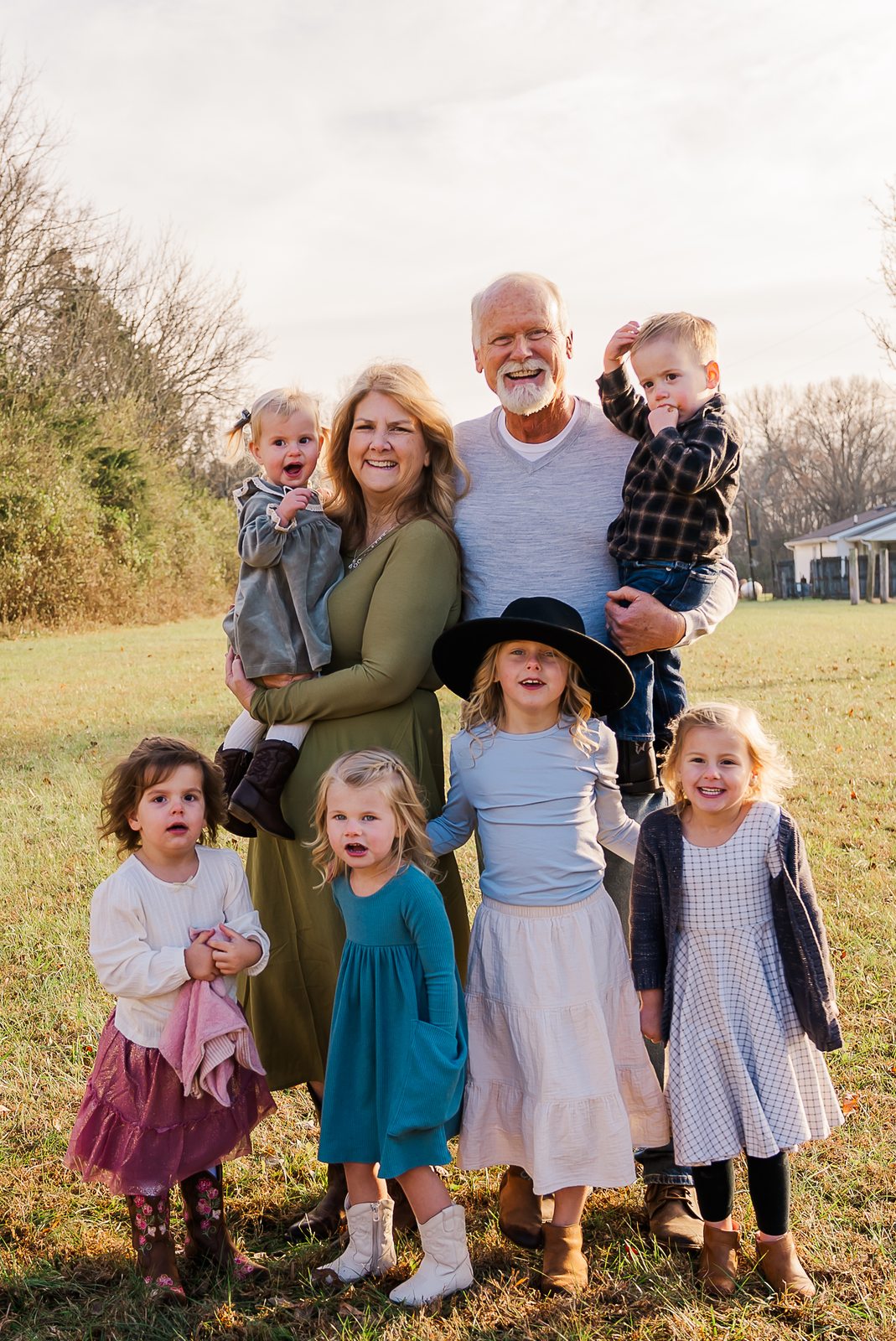
You are not dreading the pictures. You are dreading the fight before the pictures: the shoes that come off in the car, the three-year-old who goes limp the second a stranger says “look over here,” the older one who has decided smiling is embarrassing. Most parents who search “how to get kids to cooperate for pictures” are not asking for posing tips. They are asking how to get through an hour without anybody crying, including themselves.
The honest answer to “how to get a toddler to cooperate” is that you cannot. Nobody can. What you can do is set the session up so cooperation is not required, then hire somebody who knows how to work with whatever shows up.
The Real Problem Is the Plan, Not the Kid
A two-year-old who refuses to sit still is not misbehaving. She is being two. Sessions almost never go badly because of the child. They go badly because of a plan built for adults: a late-afternoon slot chosen for the light, a car ride through nap time, a snack skipped so the outfit stays clean, and a grown-up asking a small person to hold a pose and a smile at the same time.
Fix those four things and most of the “cooperation” problem disappears before anybody picks up a camera. The rest comes down to how the adults behave once it starts. Kids do not fail family photos. Schedules and expectations do.
Schedule Around Naps and Meals, Not the Light
Every photographer loves the hour before sunset. Your toddler does not care. If sunset is 7:15 and bedtime is 7:30, you are paying for pictures of a child who is already gone. Pick the time of day your kid is reliably at their best, which for most toddlers is mid-morning after breakfast or the hour after the afternoon nap. A rested, fed child in flat 10 a.m. light beats a melting one in perfect golden light every time.
Feed them first. A real meal, not crackers in the car seat. Hungry kids have no reserve of patience to draw on. Skip anything that stains (ketchup, chocolate, anything red or purple) and bring water and a clean, boring snack for later: plain cheese sticks, dry cereal, apple slices.
Never Say Cheese
“Say cheese” gets you the same face from every child on earth: eyes squeezed shut, teeth bared, chin pushed forward. It is a grimace, not a smile, and kids learn it by age three because adults keep asking for it. Stop asking for a smile at all. Smiles are a side effect. You get them by giving a kid something to do.
Give them a job or a game. Race to that tree and back. Whisper a secret to Dad and see if he can keep it. Find the bird we just heard. Show me your grumpiest face, your sleepiest face, your “Mom just said no dessert” face. Ask the five-year-old to help the two-year-old down the path. The job gives the child a reason to be where the camera needs them, and the real expression happens between the instructions.
For toddlers, peekaboo still works, and so does a parent pretending to sneeze, fall over, or forget the kid’s name. Those games land harder when a parent plays along from inside the frame.
Let Them Run First, Then Come Back
Kids get out of the car with a full tank of energy. Putting them straight into a seated group pose is like asking a dog to sit before it has sniffed anything. Give them five minutes to run. Let them climb the thing, look at the water, pick up the stick. A good photographer is shooting the whole time, and some of the best frames of the day come from this stretch, when nobody is being asked for anything.
Then bring them back. “Come show Grandma the stick you found” moves a toddler into the group frame without a single word about sitting still. Run, come back, run again. Most kids will give you three or four rounds of that before they are done.
Bribes That Work, and When to Hand Them Over
Bribes work. Pretending otherwise just makes the session longer. The trick is the timing, because a bribe handed over too early is gone, and a bribe dangled as a threat (“no cookie unless you sit still”) turns the whole thing into a standoff.
Promise it at the start, plainly: “When we are finished, we are going to the playground.” Then do not mention it again unless the kid brings it up. For longer sessions, a small halfway reward (a few fruit snacks, one sticker) resets the clock. Save the real prize for the end. Keep whatever you bring small and clean, because a blue lollipop halfway through a session shows up in every photo afterward.
And do not let the bribe become the subject. If every sentence is “remember the ice cream,” the kid is thinking about ice cream, and that is the face you get.
Why Hovering Behind the Camera Backfires
This is the hard one for parents, because it feels like helping. You stand behind the photographer, wave, make the noise, say “look at the camera, honey, look here, smile.” And the child looks at you, not the lens, slightly off to the side in every frame. Worse, the child hears the edge in your voice, feels the tension, and tightens up. Kids read adults far better than adults think.
The fix is one voice. If the photographer is talking to the kids, the parents are quiet, either inside the frame or well out of earshot. Correcting from the sidelines (“fix your collar,” “stand up straight,” “stop making that face”) does not improve the next frame. It just adds stress to a kid who was probably about to do something great.
The best thing a parent can do is relax and play. A toddler who sees Mom laughing stops scanning for trouble. If you are not in the shot, stand where the kid cannot see you.
What a Patient Photographer Actually Does
Patience with kids is not standing there waiting for them to settle. It is a set of habits.
They get low. Eye level with a toddler means kneeling or lying in the grass, because a photo taken from an adult’s standing height looks like surveillance. They keep shooting, because the frame right after the “pose” is usually the one you want, so the camera never really comes down. They follow the kid instead of dragging the kid to a spot, and they work fast, because the window with a two-year-old is short.
And they put the formal group shot in the middle, not the end. The first ten minutes are warm-up, when kids are still deciding about the stranger. The last ten are the slide toward done. The middle is where a whole family can stand together and look like themselves. A photographer who saves the big one for the end is betting on the worst part of a toddler’s hour.
Twenty-Minute Mini Session or a Longer, Unhurried One?
A twenty-minute mini session is a sprint. It works when the kids are fed, rested, and dressed before they step out of the car, and what you want is one solid group frame plus a handful of candids. Most toddlers have about twenty minutes of goodwill in them anyway, so the format fits the kid. The downside is margin. If the two-year-old melts down at minute six, there is no room for a snack break and a reset.
A longer session is built for exactly that margin: a walk, a break, a change of clothes, a second spot a hundred yards away, and the stretch where everybody forgets the camera is there. If you have more than one small child, a kid who warms up slowly, or you want the candids more than the group shot, the longer, unhurried session is the safer bet. One easygoing kid and a specific picture in mind? The mini is plenty.
The Photo You Really Want Is the One Between the Poses
Think about the family photos you actually keep. Not the one where everybody is lined up and looking at the lens, although that one is worth having. It is the frame where the toddler is being carried upside down and shrieking, the one where the older kid finally cracked up at Dad’s bad joke, the one where Grandpa is not looking at the camera because he is looking at the baby.
That is the candid between poses, and it is what the whole approach above is for. Say it out loud to whoever is shooting: “we want the in-between stuff more than the lineup.” A photographer who hears that will keep the camera up through the chaos instead of waiting for it to stop.
When It Falls Apart Anyway
Sometimes it falls apart anyway. A tooth is coming in, the nap did not happen, the four-year-old has decided today is the day to test every boundary. No plan survives all of that, and the worst move is to push through a crying child because the clock is running.
Take a break. Walk away from the spot, hand over the snack, let them watch something for five minutes if that works at home. Most kids come back from a meltdown faster than parents expect, and a short walk somewhere new resets them more reliably than any instruction. If they do not come back, accept it. Three great frames and one picture of a toddler sobbing into Dad’s shoulder is still a true record of that year. Any photographer worth hiring will say so plainly and offer to pick it up another day rather than hand you a gallery of forced faces.
How We Run Family Sessions
SDub Media is mostly a Nashville video production company. Portraits and family sessions are a deliberately small part of what we do, a handful a year, and the person who owns the company is the one behind the camera and the one editing afterward. We do not fit family sessions between three other jobs on the same day, which matters more with kids than with any other kind of shoot.
Our family sessions are unhurried, so the kids get to be kids and nobody is holding a smile for an hour. We shoot on location, wherever makes sense for your family, around Nashville, Nolensville, Brentwood and Murfreesboro. Every photo comes back at full resolution, and the whole gallery is yours. Pricing is one flat number with the outfit changes and the full gallery included. Immediate family is $600 and extended family $850, both listed on our photography page.
We also sometimes run short mini sessions on set dates: about twenty minutes, families back to back, private gallery a few days later. If that format fits your kids better, ask about the next dates.
Whichever way you go, bring a fed, rested toddler, leave the word “cheese” at home, and get in touch when you are ready to talk about a session.