
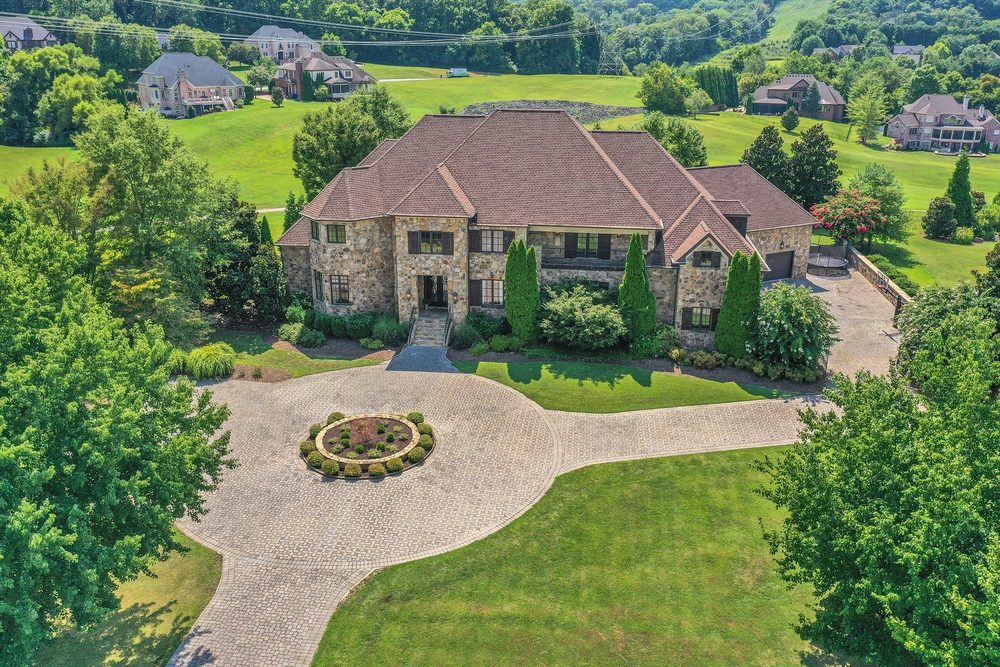
A Nashville agent told us last month that she had stopped putting video on her listings. Not because it did not work. Because the videos she was getting back, drone pass over the roof, slow push through the foyer, a few seconds of the kitchen, looked exactly like every other video on her feed. Buyers were scrolling past them as fast as they scrolled past the photos.
That is the real problem with real estate video in 2026. The bar moved. A polished property walkthrough used to be a differentiator. Now it is table stakes, and a bad one actively hurts the listing because it tells buyers the agent does the bare minimum.
This is a guide for Nashville agents who want video to actually do something: win listings, build a personal brand, and shorten days on market. We will cover what to shoot, what it costs, who you should hire, and the parts of the process most agents do not see until they are mid-shoot wishing they had asked better questions.
What Real Estate Video Actually Includes
When agents say “I need real estate video,” they usually mean one of four very different things, and the confusion is where most budgets get wasted. Get the category right first.
Property tour video. A two to four minute walkthrough of a specific listing, built to live on the MLS, Zillow, YouTube, and the listing agent’s social feeds. This is the workhorse. It sells the house.
Agent brand video. A one to three minute film about the agent, not a property. Who they are, what part of Nashville they know, who they help. This runs on the homepage of their site, on their About page, in their LinkedIn header, and in cold outreach. It does not sell a house. It books listing appointments.
Neighborhood video. A short film about a part of town. East Nashville, Germantown, Franklin, Brentwood, Sylvan Park. It is a content asset. It ranks on YouTube for “moving to East Nashville,” it gives the agent something useful to send to relocation prospects, and it positions them as the local expert.
Listing teaser. A 15 to 30 second vertical cut built specifically for Instagram Reels, TikTok, and Facebook Stories. Fast, music-driven, two or three rooms maximum. Designed to stop a thumb, not to give a full tour.
A complete real estate video strategy uses all four. Most agents start with property tours, realize the property tours alone do not move their personal brand forward, and end up adding the others over a year or two. Knowing this up front saves money.
Real Estate Video Production in Nashville: What It Costs
Real estate video production in Nashville prices out across a wider range than most other commercial video work in this market, mostly because the term covers so many different products. Here is what we see Nashville agents actually paying in 2026.
A solo videographer shooting a property tour on a gimbal with one camera, light editing, music license, and a 24 hour turnaround sits in the $350 to $600 range per property. This is the most common spend, and for a $400,000 to $700,000 listing it is the right one.
Add aerial drone footage (a licensed Part 107 pilot, not the agent’s hobby drone) and the number moves to $500 to $900. For most Nashville listings the drone is worth it because it shows the lot, the neighborhood, and any tree cover the buyer cares about.
A higher-end production with two-camera coverage, twilight or dusk exterior shots, a polished color grade, and longer edits for both horizontal and vertical formats lands in the $1,000 to $2,500 range per property. This is appropriate for a $1.5M-plus Nashville listing or a Coldwell Banker Global Luxury property where the production cost is a rounding error against the commission.
Agent brand videos are their own line item: a single shoot day with an interview, b-roll around Nashville, and a polished two to three minute edit typically runs $2,500 to $5,000. You film it once and it works for two or three years.
Neighborhood videos depend on how much b-roll, how many interviews (a coffee shop owner, a school principal, a long-time resident), and how many cuts you want from the footage. A real one usually costs $1,500 to $4,000 per neighborhood, but the agent owns it forever.
If you are pricing video for the first time, that pattern of pricing tracks the broader Nashville market. We wrote a longer breakdown of how Nashville production rates are built in our Nashville corporate video production pillar and the Nashville video production companies guide, and the math is the same for real estate: crew time and edit time are the real cost, gear is the smaller piece.
What Makes a Good Property Tour, Specifically
Most property tour videos lose the buyer in the first ten seconds, and it is almost always one of three reasons.
First, the opening shot. A drone fly-in over the roof is not an opening. Buyers cannot orient themselves, they cannot tell which house, and by the time the camera lands the viewer has already decided this looks like every other video. A better open is a wide static of the front of the home, three seconds, then a slow move toward the door. Buyers know exactly what they are looking at.
Second, the pace. Real estate gimbal footage tends to drift slowly through every room because slow looks “cinematic.” It is also the fastest way to lose a buyer. A good two-minute tour cuts on the beat, holds the hero rooms (kitchen, primary suite, the view) longer than the secondary rooms, and skips the laundry. Show the room, do not catalogue the room.
Third, the audio. Most real estate videos use the same three royalty-free tracks: an upbeat piano, a lo-fi guitar, or a moody synth. Buyers scrolling Zillow have heard them a hundred times this week. A small upgrade, paying $15 to $50 for a music license off Musicbed or Artlist instead of the YouTube library, makes a property feel like a different tier of listing immediately.
The other thing buyers notice without realizing it is the light. Houses shot at the wrong time of day look hollow and gray, even when the listing is beautiful. East-facing kitchens want morning. West-facing living rooms want late afternoon. Twilight exteriors (the 20-minute window where the sky still has color but the house lights are on) make almost every Nashville home photograph and film better. Most agents do not request a specific shoot time. The good videographers schedule for the light. If your videographer is asking which way the house faces before booking, that is a good sign. If you want to see what a twilight exterior actually does for a listing, our piece on twilight real estate photography is the photo version of the same idea.
Drone Footage: When It Earns Its Cost, When It Does Not
Drone shots are the most overused element in Nashville real estate video, and also the most genuinely useful when they are used well.
Use drone when: the lot is large, the property has acreage or water or a view, the neighborhood context matters (proximity to a park, a school, downtown), or the architecture is best understood from above. A Franklin estate on five acres without a drone shot is malpractice.
Skip drone when: the lot is small and surrounded by other small lots. A 1,400 square foot bungalow in East Nashville does not need a 30-second aerial pass. It needs a sharp ground-level open and a strong interior cut.
One thing many agents do not know: legal drone use for a real estate listing requires a Part 107 certified pilot. If the videographer is shooting your listing with a drone and they are not Part 107, they are flying commercially without a license, and the FAA fines for that start at $1,100 per flight. Ask. Any legitimate Nashville video company will have at least one Part 107 pilot on staff.
Agent Brand Video Is Where Most Nashville Agents Are Leaving Money
Here is the part most agents underspend on, and it is the one that actually changes the business.
A property tour sells one house. The seller signs your listing agreement, the video helps the listing move, the listing closes, and the video is functionally dead the day it closes. You produced an asset with a 30 to 90 day shelf life.
An agent brand video is the opposite. It runs on your website for three years. It introduces you in every cold email. It sits at the top of your LinkedIn. When a potential seller is choosing between you and two other agents at the listing appointment, the brand video is the reason they pick you before you walk in the door.
What makes a brand video work is almost never the production polish. It is the agent being willing to say something specific. “I grew up in Bellevue and I have sold 47 homes within four miles of Harpeth High School in the last six years” is a brand video. “I am passionate about helping families find their dream home” is a Zillow profile.
For Nashville agents specifically, the brand story tends to land in one of three places: a neighborhood specialty (Germantown, 12 South, Brentwood, Franklin), a property type (historic homes, new construction, investment), or a buyer type (relocation from California, first-time buyers, downsizers). Pick one. The agents who try to be generalists on video sound like every other generalist on video.
Recurring Video Beats One-Off Listings
The other shift we have watched real estate teams make over the last two years is moving from per-listing video to a recurring content rhythm. The reasoning is straightforward.
Per-listing video is a transaction. You list a house, you order a video, you post it, the cycle ends. Nothing compounds.
A weekly or monthly recurring video, posted to YouTube and the team’s social feeds, compounds. A market update, a neighborhood spotlight, a how-it-works explainer for first-time buyers. After six months, an agent who has done 24 of these has a searchable library, a YouTube channel that ranks for Nashville real estate questions, and a feed that makes them look obviously more active than competitors.
Our flagship real estate client, Coldwell Banker Southern Realty, runs this exact model. We film a recurring series with the owner at their main Nashville office, a podcast that records monthly in their in-house room, and rotating monthly headshot days across their offices. None of those are property tours. All of them are part of why the brand stays in front of Middle Tennessee agents and consumers every week. That is the model that wins in a market where the listing volume is already there. If you want to see how that recurring approach scales across a business, we walked through it in our Nashville corporate video production guide, where the math on weekly content versus one-off shoots is worked out in detail.
How to Vet a Nashville Real Estate Videographer
Most agents pick a videographer by price or by who is fastest to respond. Both are bad filters. Here is what to ask instead.
“Can I see two full property tours you shot recently, not the highlight reel?” A reel is curated. Two full edits are not. If the full edits feel as good as the reel, you are dealing with a real operator.
“Who is doing the edit, and how many revisions are included?” A lot of Nashville real estate video work is shot by one person and edited by a different one offshore. That is not automatically bad, but it changes the revision process and the turnaround. Get the answer in writing.
“What is the turnaround?” For property tours, 24 to 72 hours is the standard. Anything longer than a week is not real estate video, it is general video work being squeezed into a real estate timeline.
“Are you Part 107 certified for drone, and do you carry liability insurance?” Yes and yes, or move on. A million dollar listing on a multimillion dollar lot with an uninsured drone operator is a risk the seller did not agree to take.
“What deliverables are included?” A horizontal edit for MLS and YouTube. A vertical cut for Instagram and TikTok. Stills pulled from the video for the listing. A square version for Facebook. If the videographer is delivering one file in one aspect ratio, you are getting last year’s product.
And one less obvious filter: the chemistry test. You are going to spend two hours in someone’s house with this person, in front of the seller. If they are awkward at the intake call, they will be awkward at the listing. Pick someone who can hold a room.
What to Have Ready Before the Shoot
The shoots that go badly almost always go badly for the same reasons, and almost all of them are preventable in the 24 hours before the videographer arrives. Send this list to the seller.
Lights on in every room, including the ones you are not sure will appear on camera. Blinds open. Personal photos either left up or taken down, but decided in advance (taking them down halfway through the shoot wastes 30 minutes). Pets out of the house. Cars out of the driveway. Trash bins behind the fence. Counters cleared in the kitchen and bathrooms. HVAC vents pointed up so air is not blowing curtains in the shot. Toilet lids down.
That is a 20 minute prep that adds two hours of usable footage. Sellers who skip it cost themselves the strongest shots of their own listing.
The Honest Part: Video Will Not Save a Bad Listing
The reason we put this near the end is that no one says it out loud, and it matters.
A great real estate video on a well-priced, well-prepped Nashville listing in a decent neighborhood will help it sell faster and probably for slightly more. A great real estate video on an overpriced listing, a cluttered listing, or a listing on a problematic lot does not fix any of that. Buyers see what is there.
What the video can do is make the right buyer get to the showing instead of scrolling past, and make the wrong buyer self-select out before they waste anyone’s afternoon. That is real and it is worth the production cost. It is not a magic trick.
Putting It Together
For a Nashville agent looking at video for the first time, here is the sequence that has worked for the agents we know who built real businesses on it.
Start with one strong agent brand video. Get the brand piece right before you spend money on individual property tours, because the brand video is the asset that books the appointments that produce the listings that get the property tours in the first place.
Add property tours on every listing above your average price point. Below that, a strong photo set and a 30-second vertical cut may be enough. The video budget needs to scale with the commission, not be uniform across every house.
After six months, add a recurring content rhythm, even if it is just two market updates a month filmed at your office. That is the piece that compounds.
And do not skip the neighborhood video. One well-made neighborhood film about the part of Nashville you sell in, ranking on YouTube for “moving to (your neighborhood),” will deliver leads for years longer than any single listing video ever will.
Real estate video production in Nashville rewards the agents who treat it as a system, not a line item. The market is competitive enough that good video gets noticed and average video does not.
If you are a Nashville agent or team thinking through any of this, we are happy to talk through what makes sense for your business before anyone quotes you a number. Get in touch here.